
My Cheesecake-Shaped Poverty
The Triangle Zone was our name for the place. I couldn’t think of any better name for it. I mean, the area was a perfect triangle, as if someone had drawn it out. And she and I lived there, on that land. This was back in 1973 or ’74.
我们都管那个地方叫“三角地带”。此外我琢磨不出如何称呼是好。因为那的的确确是个三角形,画上画得一般。我和她就住在那个地方,一九七三年或七四年的事了。
When I say “Triangle Zone,” don’t go picturing a kind of delta. The Triangle Zone we lived in was much narrower, more like a wedge. Imagine, say, a round, full-sized cheesecake. Cut it into twelve equal pieces with a knife so it’s like the face of a clock. What you’d end up with, of course, are twelve slices of thirty degrees each at the tip. Place one of these on a plate and, as you sip your tea, take a good hard look at it. That tapered end of the thin slice of cake? That’s exactly the shape of the Triangle Zone I’m talking about.
虽说是“三角地带”,可你不要想成是所谓的delta(希腊语,三角洲、三角形的)形状。我们住的“三角地带”细细长长,状如楔子。若说得再具体点,请你首先想象出一个正常尺寸的圆圆的芝士蛋糕,再用厨刀将它均匀地切成十二份,也就是切成有十二道格的钟表盘那个样子。其结果,当然出现十二块尖角为三十度的蛋糕。将其中一块放在盘里,边啜红茶什么的边细细地看。那顶端尖尖的、细细长长的蛋糕片就是我们“三角地带”的准确形状。
O.K., so how did such a weirdly shaped plot of land come about? Well you might ask. Or maybe not. Either way’s fine with me, since I don’t know the answer. I asked some of the neighbors about it, but all I found out was that it had been shaped like a triangle long, long ago, was a triangle now, and would probably—far, far into the future—remain a triangle. People there didn’t seem to want to talk about this Triangle Zone, or even think about it. For them, it was like talking about a wart behind your ear. Better left undiscussed. Probably because of its weird shape.
怎么会形成如此形状不自然的地带呢——你也许会问,也许不问,都无所谓。问不问反正我都不清楚。问本地人也问不出个究竟,他们知道的不外乎很早很早以前是三角形,现在是三角形,将来定然也是三角形。总的说来,本地人好像不大愿意谈也不大愿意想“三角地带”。何以“三角地带”被如此——像耳后疣一样——漠然置之,缘由不得而知,大概是因为形状怪异吧。
Railroad lines ran along either side of the Triangle Zone, one a national railway line, the other a private line. The two lines ran parallel for a while, then at the very tip of the wedge formed a junction where it was as if they were ripped apart, branching off at strange angles, one north and one south. It was quite a sight to see. Whenever I gazed at the trains whizzing by at the tip of the Triangle Zone, I felt as if I were standing on the bridge of a destroyer slicing its way through the ocean waves.
“三角地带”两侧有两条铁路通过,一条是国营线,一条是私营线。两条铁路齐头并进了一阵子,以楔尖为分歧点,简直就像被撕裂开来一般以不自然的角度各奔南北,景观十分了得。每次目睹电气列车在“三角地带”的尖端南来北往,我就恍惚觉得自己是站在驱逐舰舰桥之上,而那驱逐舰正在海上破浪前进。
In terms of livability, the Triangle Zone was appalling. First of all, there was the obvious noise level. But what do you expect? How could it not be earsplitting to live hemmed in between two railroad lines? Open the front door and there was a train roaring by; open a window at the back of the house and yet another train would thunder by, right before your eyes. And when I say “right before your eyes,” I’m not exaggerating. The trains were so close that I could look the passengers in the eye and nod a greeting. Really something, now that I think about it.
但是,从居住舒适度和居住功能来看,“三角地带”实在是一塌糊涂。首先噪音厉害。也难怪,毕竟两条铁路左右相夹,不可能不吵。一开前门,眼前一列电车呼啸而过;一开后窗,眼前又一列电车咆哮而至。用眼前这种说法决不夸张,实际上两列电车也近得乘客可以对视致意,如今想起来都觉得叹为观止。
You’d assume that it would be quiet after the last train of the night had passed by, right? I thought so, too, before I moved there. Problem was, there was no such thing as a last train. The last passenger train was just before 1 A.M., but then came the late-night freight trains. And, once they’d finished rolling by, at dawn, the next day’s passenger trains would start up again. It was an endless repeat of this, day after day.
你或许要说末班车过去后总该安静了吧。通常都那么想,搬来之前其实我也那么想来着。然而压根儿就不存在什么末班车。旅客列车凌晨一时全部运行结束后,深夜班次的货物列车接踵而至;天明时分货车大体告一段落,翌日的客车又杀上门来。如此日复一日无尽无休。
Talk about crazy.
呜呼!
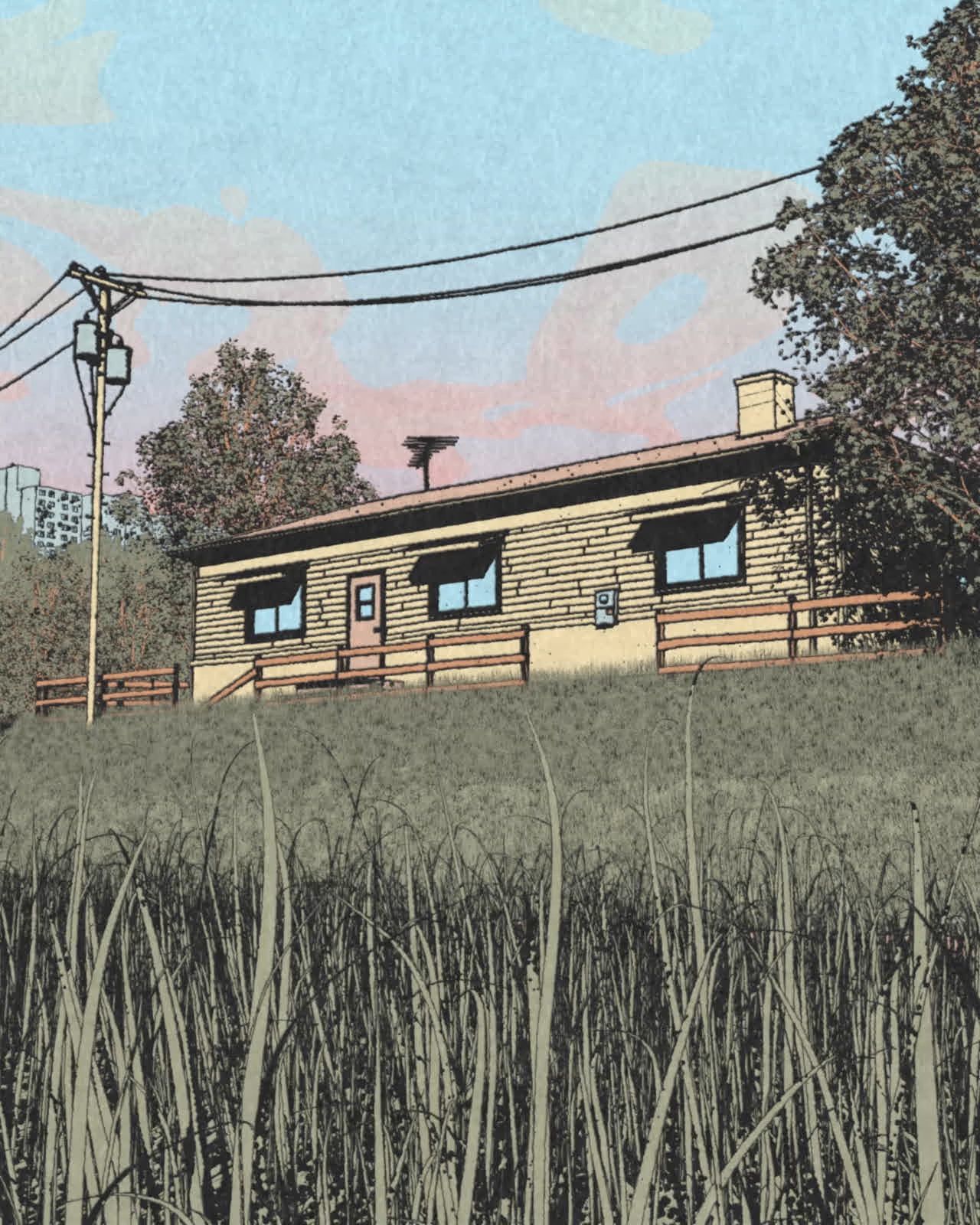
We picked this place to live in for one simple reason: it was dirt cheap. It was a detached house with three rooms, its own bath, and even a small garden, all for about the same price as renting a studio apartment. Since it was a stand-alone house, we could bring our cat along, too. It was as if the place had been specially made, just for us. We’d only recently got married, and, not to brag or anything, but we could very well have been featured in the Guinness Book of Records under “World’s Poorest Couple.” We saw the house listed in the window of a real-estate agent’s office near the station. At least as far as the rent and the layout of the rooms were concerned, this was a lucky find. Astonishing, even.
我们所以特意选住这里,第一第二都是因为房租便宜。独门独院三个房间,有浴室,甚至有个小花园,而房租仅相当于公寓里一个六张榻榻米大小的房间。既是独门独院,那么猫也能养。简直就像专为我们准备的房子。我们刚刚结婚,非我自吹,穷得上吉尼斯纪录都绰绰有余。我们是在站前不动产中介店贴的广告纸上发现这房子的。仅就条件和租金和房子结构来看,堪称奇迹性发掘。
“Yeah, cheap it is. For sure,” the bald real-estate agent said. “But I have to warn you—it’s really noisy. As long as you can stand that, you could call it a lucky find.”
“便宜得很哟!”秃脑瓜子中介说,“啊,吵倒是相当吵的,不过只消忍耐一下,未尝不可说是拾来的大元宝。”
“Would you mind showing it to us?” I asked.
“反正先看看好么?”我问。
“Sure. But can’t the two of you just go? I get a headache every time I go to that place.”
“好好。不过,你们自己去可好?我嘛,一去那里就头疼。”
He handed me the keys and drew a map. What an easygoing agent.
他借给钥匙,画出去那座房子的路线图。好个爽快的中介。
On the map, the Triangle Zone didn’t look far from the station, but, when we actually walked to it, it took forever. We had to detour around the railroad tracks, cross an overpass, and trudge up and down a somewhat filthy hill before we finally arrived at the rear of the Triangle Zone. There wasn’t a store in sight. A totally seedy neighborhood.
从火车站看去,“三角地带”似乎近在眼前,但实际走起来,到那里花的时间相当惊人。在铁道上“咕噜”绕一圈,过天桥,沿脏兮兮的坡路上上下下,好歹从后面兜到了“三角地带”。周围商店之类形影皆无,寒伧得近乎完美。
My wife and I went into the house at the very tip of the Triangle Zone and stayed for about an hour, just hanging out. During this time, trains kept on rumbling past. Whenever an express train roared by, the windows would rattle. We couldn’t hear each other while a train was passing. We’d be talking and then would have to stop until it was gone. We’d resume talking when it got quiet, only to be interrupted a moment later by yet another train. Choppy, interrupted communication à la Jean-Luc Godard.
我和她走进“三角地带”尖头的一座孤零零的房子,在里面逗留了一个小时。这时间里有相当之多的电车从房子两侧通过。特快通过时,窗玻璃“咔咔”作响。过车时间里听不到对方说话。正说着有车开来,我们便闭嘴等车过完。静下来刚开始说话,又一列电车尾随而至。那情形,不知该称为communication(英语,交流、通讯、传播)的中断还是分裂,总之是十分让吕克·戈达尔(法国新浪潮电影导演)式的。
Aside from the noise, the house wasn’t so bad. The structure itself was old-fashioned and in need of some serious repair, but on the plus side it had a tokonoma recessed alcove and a small outside sitting area attached to the house, and had a nice feel to it. Spring light shining in through the windows formed little sunny squares on the tatami. It was a lot like the house I’d lived in, years ago, when I was little. “Let’s take it,” I said. “I know it’s noisy, but we’ll get used to it.”
不过除去噪音,房子格调本身相当可以。式样古色古香,整体上没有硬伤,壁龛和檐廊也有,很够味道。从窗口泻进的春日阳光在榻榻米上做出小小的方形光照,很像我小时候住过的房子。“租吧。”我说,“的确很吵,不过我想总可以习惯的。”
“If that’s what you think, I’m O.K. with it,” she said.
“你这么说,就这样吧。”她应道。
“Sitting here together like this, it feels like we’re married, our own family.”
“在这里这么待着不动,觉得就像自己结婚成家了似的。”
“Well, we are married.”
“实际上不也结婚了?”
“Well, yeah. True enough,” I said.
“那是,那倒是。”我说。
We went back to the real-estate agency and told the bald agent that we’d take it.
我们折回不动产中介店,说想租。
“Isn’t it too noisy?” he asked.
“不吵?”秃脑瓜子中介询问。
“Yes, it is, but we’ll get used to it,” I said.
“吵当然吵,可总能习惯。”我说。
The agent took off his glasses, wiped them with a tissue, took a sip of tea from his teacup, put his glasses back on, and looked at me.
中介摘下眼镜,用纱布擦拭镜片,啜一口茶杯里的茶,重新戴回,看我的脸。
“Well, ’cause you’re young,” he said.
“噢,年轻嘛,到底。”他说。
“Right,” I replied.
“嗯。”我应道。
And we filled out the rental agreement.
接着我们签了租约。
A friend’s little minivan was more than enough for our move. Futons, clothes, a lamp, a few books, and a cat—that was the extent of our belongings. Nothing else. No radio or TV. No washer or dining table or gas stove or telephone or kettle or vacuum cleaner. That was how poor we were. So our move, such as it was, took only half an hour. Life can be simpler if you don’t have much money.
搬家用朋友一辆轻型厢式货车足矣。被褥和衣服和餐具和台灯和几册书和一只猫——这便是我们的全部家当。既无组合音响又无电视机,洗衣机没有电冰箱没有餐桌没有煤气灶没有电话没有电热水瓶没有吸尘器没有电烤箱没有,一无所有。我们就是穷到这个地步。所以,虽说是搬家,三十分钟都没花上。没钱也好,人生简洁至极。
When the friend who helped us move took one look at our new dwelling, hemmed in by railroad lines, he was aghast. After we’d unloaded everything, he turned to me and said something, but a passing express train drowned out his words.
帮忙搬家的朋友看到我们夹在两条铁路之间的新居,显得相当惊愕。搬完家他想朝我们说什么,碰巧特快驶过,什么也没听见。
“Did you say something?” I asked.
“你说什么来着?”
“People really live in a place like this, huh?” he commented, impressed.
“这样的地方真的也能住人!”他一副敬佩的神情。
We ended up living in that house for two years.
最终,我们在那房子里住了两年。
It was a poorly built house in a way, since wind blew in through cracks and gaps all over the place. Pleasant enough in the summer, but, come winter, it was hell. With no money to buy a space heater, my wife and I and the cat would crawl under the futons once the sun set, literally clinging to each other to keep warm. Many a time we’d wake up to find the water in the kitchen faucet frozen solid.
房子建得极其马虎,到处有空隙来风。夏天自是开心惬意,冬天就成了地狱。买取暖炉的钱都没有,天一黑,我就和她和猫钻进被窝,那才叫不折不扣的相拥而眠。早上起来看到厨房水槽已经结冰的事也屡见不鲜。
Once winter passed, the spring would come. And spring was a lovely season. She and I and the cat would breathe a sigh of relief. In April, the railroads went on strike for a few days, and we were ecstatic. Not a single train came rumbling by all day. We carried the cat down to the railroad tracks and sat there sunning ourselves. It was so quiet it was as if we were sitting at the bottom of a lake. We were young, just married, and the sunshine was free!
冬去春来。春天美妙无比。春天一到,我也好她也好猫也好无不如释重负。四月间铁路有几天罢工。一有罢工,我们真是欢欣鼓舞。一整天一列车都没有。我和她抱着猫到路轨上晒太阳。安静得简直像坐在湖底。我们年轻,新婚不久,阳光免费。
Even now, when I hear the word “poor,” I remember that thin, triangular sliver of land. And I wonder, Who could be living there now?
至今每次听到“贫穷”二字,我都会想起那块三角形的细长土地。那房子现在到底住着什么人呢?